Down the Rabbit Hole with Alice in Wonderland
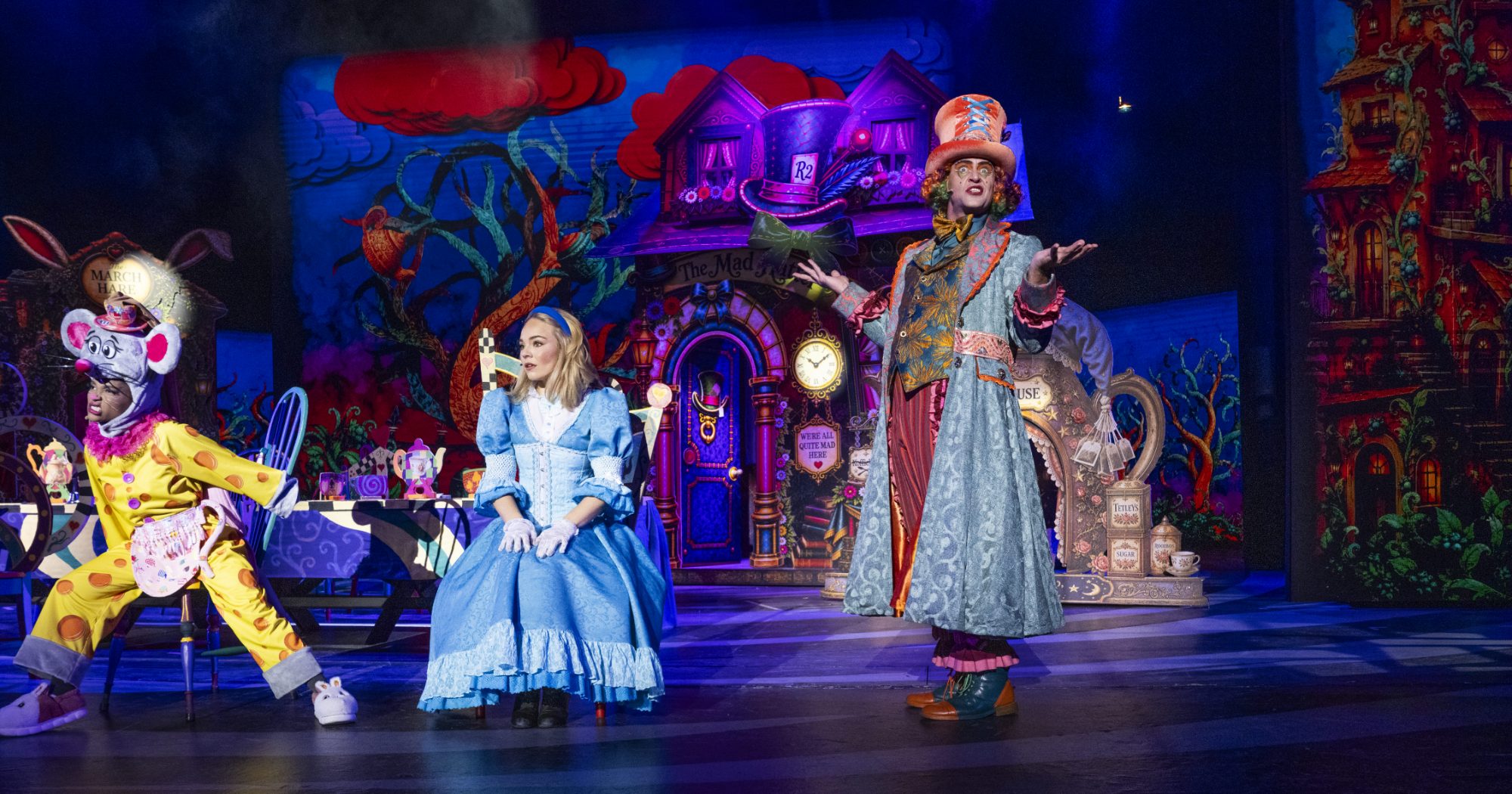
Lewis Carroll first told the story of Alice on a summer river trip in 1862, making it up as the boat drifted along for three restless children. It began as a performance, shaped by the faces in front of him, and it has kept that spirit of anarchic invention ever since. So it feels right that Janice Honeyman’s pantomime begins where the story did. The programme takes us to a riverbank and into Carroll’s study before Alice goes anywhere near a rabbit hole, with the author himself as our narrator.
Pantomime season is one of my favourite times of the year. It tells me the end of year holidays are almost here, and it offers something increasingly rare: a whole family laughing, singing and dancing in the same room. Honeyman has been delivering that for decades. This is her 39th pantomime, and the tradition at Joburg Theatre has now run for nearly four decades, which means there are adults in the audience who first came as children and are now bringing their own.
A story that refuses to behave
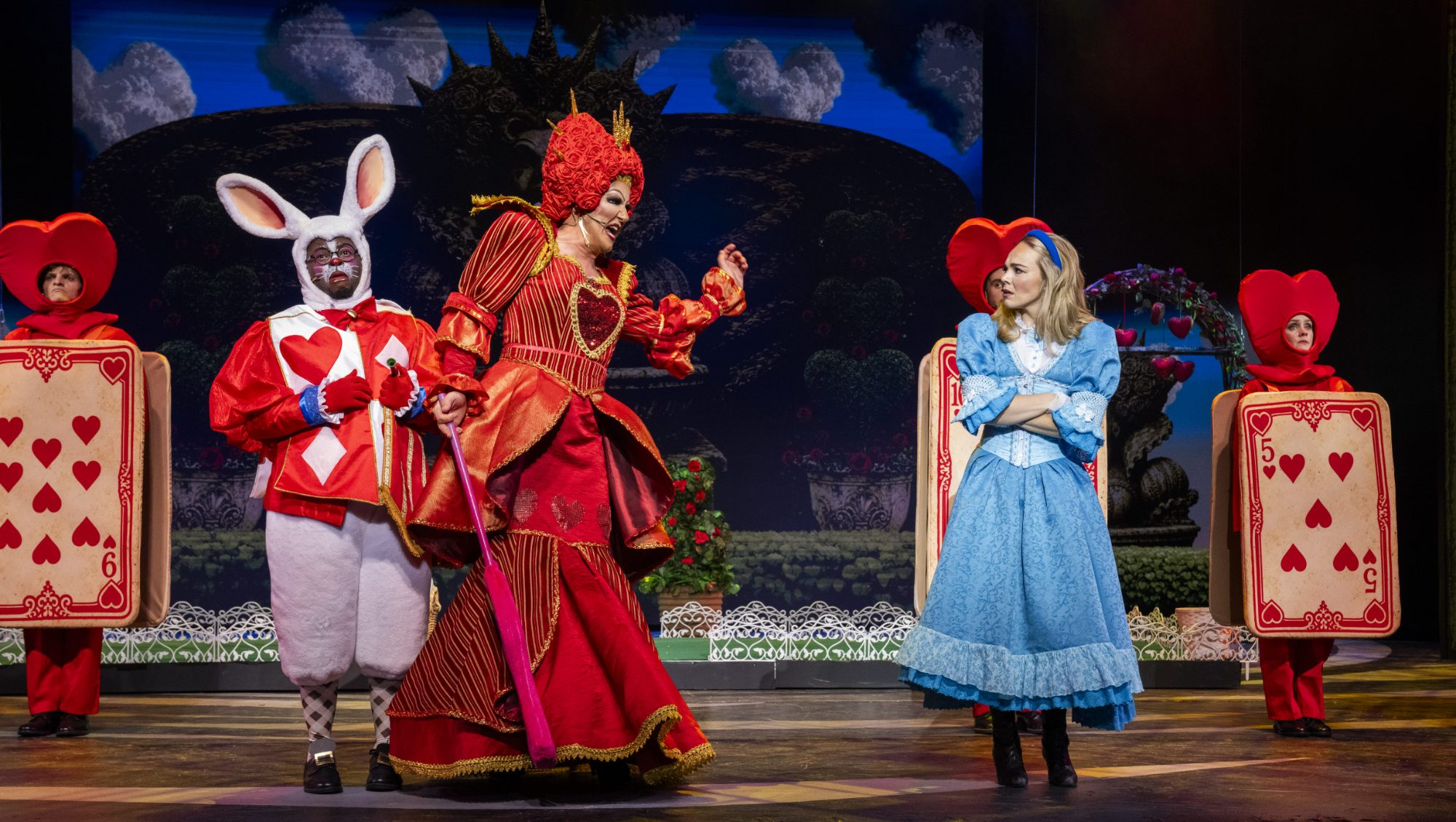
Alice was always going to be a difficult choice for a pantomime. Most of the usual stories arrive with sturdy bones: a quest, a villain, a rescue, a happy ending everyone can see coming from the first scene. Carroll’s book has none of that. It is strange, quirky and gloriously illogical, a string of encounters in which the rules change every time Alice thinks she has understood them. It is hardly your typical fairytale, and it resists being tidied up.
Honeyman handles this with real aplomb. Rather than forcing the story into a familiar shape, she lets it be the wandering, episodic thing it is. The programme lists the journey as a series of distinct little worlds, from the Hall of Doors and the Mushroom Forest to the Queen’s Kitsch Chamber, a courtroom and a showdown with the Jabberwock. Each one gives the production room to change its colour, its mood and its comedy. The result is a story that keeps moving and a wonderful day out for the whole family.
There is also a quiet idea underneath the silliness. Honeyman has spoken about Alice as a curious, determined girl who questions the world around her, and about the comfort of discovering that you do not need to change in order to belong. That sits well in a story about a child who keeps being told she is the wrong size for wherever she has ended up. For young audience members who are still working out who they are, it is a gentle and welcome message, and it arrives without a lecture.
Colour, light and a little digital magic
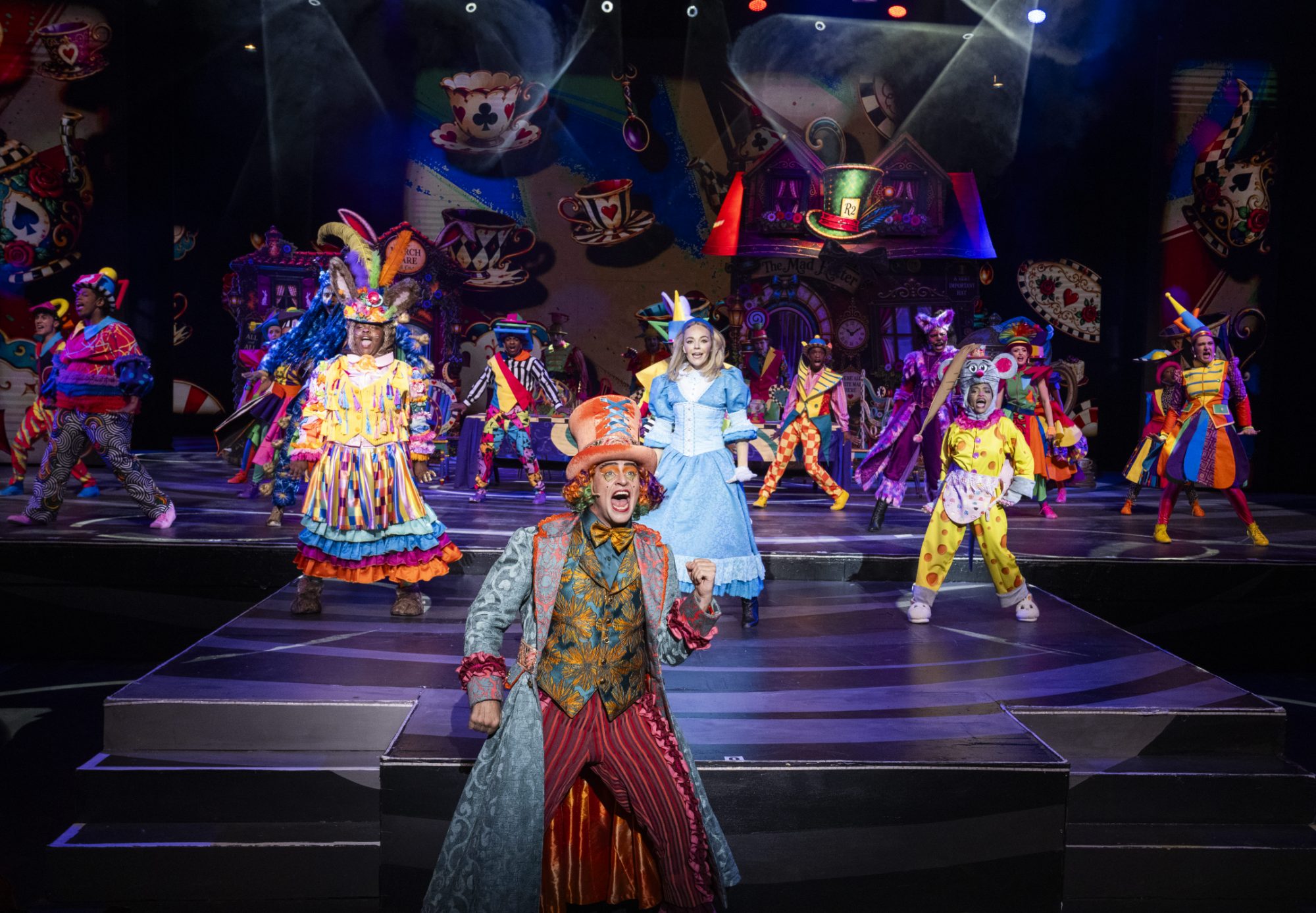
The costumes, sets and choreography are fantastic. There is so much colour, light and vibrancy on that stage that Wonderland feels properly overstuffed with life, in the best way. Mariska Meyer’s costumes give each resident of Wonderland a silhouette and a personality before a line is spoken, and Khaya Ndlovu Mpehle’s choreography keeps the whole company in motion.
What impressed me most, though, were the digital elements. Screens in a theatre can easily feel bolted on, a flashy extra that pulls the eye away from the performers. Here the projections, from production designer Andrew Timm, feel native to the story and never disjointed from what is happening on stage. Wonderland is a place where size, space and gravity are all negotiable, and the digital layer gives the production a way to honour that logic and truly engage with the magic of the tale without ever pulling us out of it. It is a good example of technology serving the storytelling instead of competing with it.
Wink, wink
The energy from the cast is something else. Every character left it all out on that stage, and the audience responded in kind. Pantomime depends on that exchange. The cheering, booing and shouting back sit at the centre of it, and Honeyman’s own programme note describes the audience’s enthusiasm as the heartbeat of every performance. On the night I attended, that heartbeat was strong.
As always, Honeyman weaves pop culture songs and references through the script, pitched at different age groups, and this is where the show earns its place as something special. A child laughs at the slapstick, a parent catches the line that sails over the child’s head, and the two of them end up sharing the room while enjoying different jokes, which is its own kind of togetherness. There are plenty of wink wink moments, and the audience is let in on every one. Parental guidance is advised for some adult humour, but it is handled with the lightness of touch that long experience brings.
Alice in Wonderland was never the easy choice for a pantomime, and Honeyman has made it look like fun. Carroll made his story up as he went, for an audience he could see, and there is something fitting about a production that keeps that live exchange going each night with a room full of people. If you are looking for a way to start the festive season with your family, or simply with the child you used to be, go down the rabbit hole. You may not come back quite the same size.