Tuesdays with Morrie: Love, Time and Human Connection
Most of us keep a to-do list that grows faster than we can clear it, and almost none of us keep a list of the people we intend to sit with before it is too late. Tuesdays with Morrie, now playing at Theatre on the Square in Sandton, slips that second list into your hands and gently asks what you plan to do with it. I arrived expecting a pleasant evening of theatre. I left with a great deal to think about and slightly damp cheeks, which I had not planned on at all.
The story will be familiar to many readers. Mitch Albom is a sportswriter consumed by deadlines and ambition. One night he catches sight of his old sociology professor, Morrie Schwartz, on television and discovers that the man who once shaped him is living with a terminal illness. He makes the journey to see him, and what begins as a catch-up becomes a standing appointment. Each Tuesday the two sit together and talk about love, work, family, regret, fear and how to live. Albom’s memoir of those visits has sold close to 18 million copies and has been translated into 48 languages, and the stage adaptation he wrote with Jeffrey Hatcher has been performed around the world since 2002. A story does not travel that far unless the questions it asks remain urgent.
Two men and a conversation
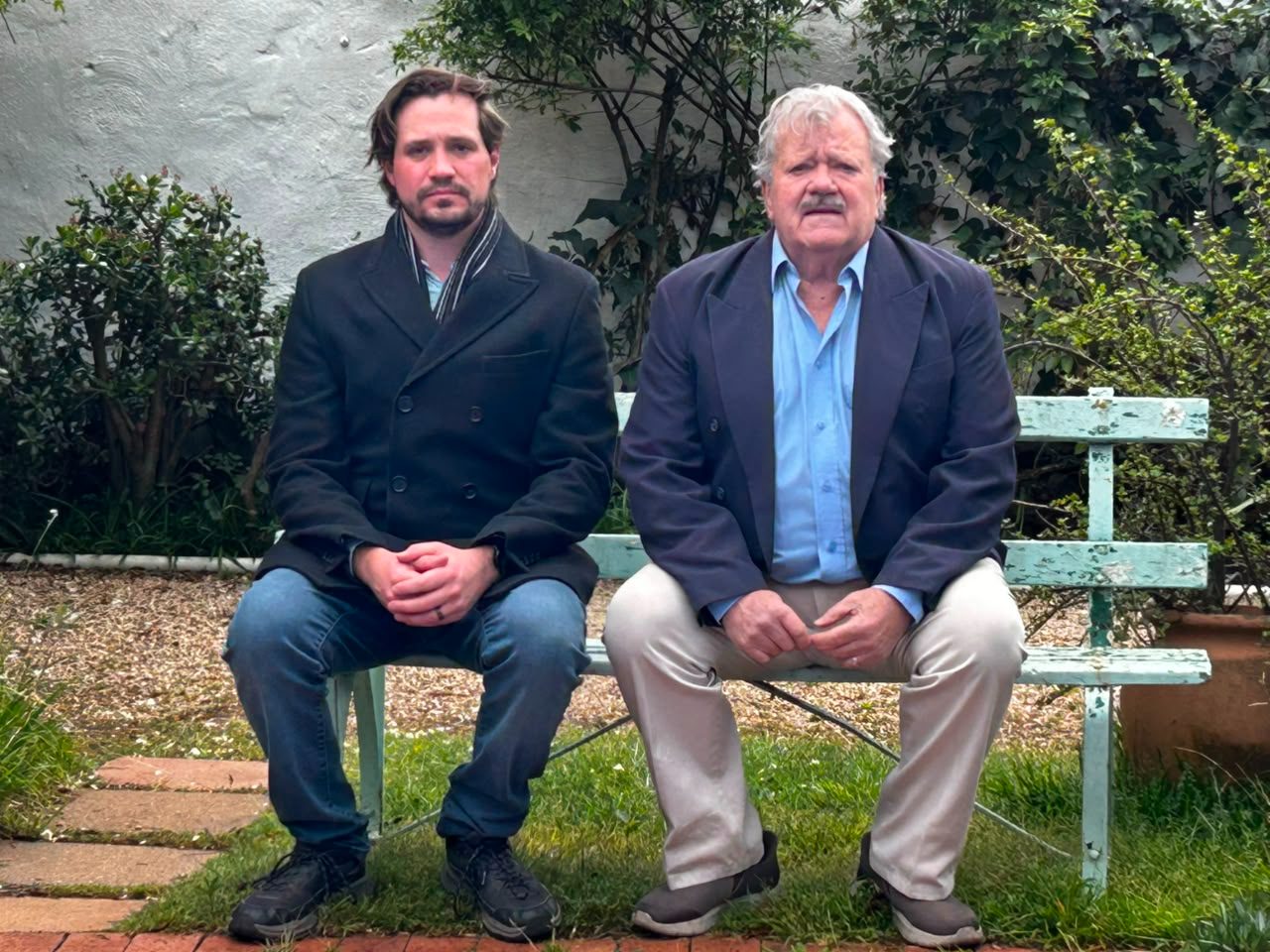
The play is intimate by design. Two actors, one room and the slow accumulation of visits place all the weight on the performers, and here that weight is carried by Michael Richard as Morrie and Jeremy Richard as Mitch, who are father and son in real life. A casting detail like that can easily become a marketing hook, but the chemistry between them is unmistakable and it is what holds the evening together. There is an ease in how they share the stage, a looseness in the humour and a stillness in the quieter moments, that cannot be manufactured. When Morrie teases and Mitch bristles, or when Mitch finally lowers his guard, it feels like the continuation of a conversation that began long before the lights came up.
The dichotomy between the two men is where much of the play’s energy lives. Morrie is expansive, curious and unhurried, a man who has stopped negotiating with the clock. Mitch is brisk and guarded, always half a step ahead of himself and already thinking about the next obligation. Watching them rub against each other is both funny and quietly revealing, because most of us will recognise a little of ourselves in each of them, depending on the week we are having.
Director Alan Swerdlow, who also staged the theatre’s 2010 production, has said he approached this as a brand-new production rather than a remount, and that he now reads the play as being as much about learning to be a good person, a mensch, as about learning to live. That reading suits the material well. It places Mitch’s journey at the centre, and it reminds us that Morrie’s wisdom only matters if somebody is willing to sit still long enough to receive it. It is a touching detail that the opening performance fell on the 31st anniversary of the real Morrie’s passing.
What we do with our time
What has stayed with me most is how plainly the play asks us to look at where our days go. We spend so much of our lives chasing the next salary, the next promotion, the bigger house and the better title, and we tell ourselves that the real living will start once the chasing is done. Morrie, who has run out of time to put things off, sees it differently. For him life comes down to loving and being loved, to paying attention to the people in front of you, and to making peace with the fact that our time on this spinning rock in space is finite. Mitch is a thoroughly modern figure in this regard. He is busy, successful by every outward measure, and quietly starved of something he cannot name until someone names it for him.
Some of Morrie’s lessons will sound familiar, the sort of thing you might find printed on a coffee mug, and a cynic could shrug at that. Yet hearing them from a man who is running out of time, in a room with another person who is actually listening, gives them a weight that no coffee mug can carry. The simplicity is the point. We already know most of what Morrie says. What we rarely do is stop long enough to act on it.
It is a gentle play, and it trusts its audience to do some of the work. The tears arrived for me without much warning, and I think that is because the humour is given room to breathe. The laughter makes the sadness feel earned, and the sadness gives the laughter somewhere to land. By the end I was thinking less about the play itself and more about my own calendar, my own priorities and the people I keep promising to make time for.
In an age when so many of us are pulled in a dozen directions by screens and notifications, there is real value in spending an evening in a shared room with a story that asks us to be present. This is a very good show for the soul. Take someone you love with you, and perhaps phone someone you have not spoken to in a while on the drive home. Considering how we all seek to spend our limited time and attention, it is a worthwhile way to spend some of yours.